Home › Tent Q&A › Are Cheap Tents Worth It?
Are Cheap Tents Worth It? When to Save and When to Spend
Heads up: some links below go to Amazon. If you buy through them it costs you nothing extra, and we may earn a small commission that keeps this site running. We only recommend tents we'd actually take camping.
Short version, because you probably skimmed three other articles before this one: for car camping, family camping, and casual weekend trips in fair-to-moderate weather, a cheap tent is absolutely worth it. I've handed nervous first-timers a $50 Coleman and watched them come back grinning. Where cheap bites is narrow and specific — serious wind and storms, ultralight backpacking, and grinding heavy use. Figure out which camp you're in and the whole question answers itself.
We've pitched every tent on this site in real weather, including a few nights we'd rather forget. So I'm not going to tell you "you get what you pay for" and call it a day. That line is lazy. The honest answer is that price buys you specific things — and for a lot of campers, those things are stuff you'll never actually use. Let's sort it out.
What you're actually paying for when a tent costs more
A $400 tent isn't four times as waterproof as a $90 one. The price gap buys a handful of concrete upgrades, and the only question that matters is whether your trips need them:
- Aluminum poles instead of fiberglass. Aluminum flexes hard in wind and springs back; fiberglass can splinter and snap in a real gale. This is the single biggest reason to spend up if you camp in exposed, windy places.
- Full-coverage rainfly vs. a partial fly. Pricier tents run the fly closer to the ground, so sideways rain hits coated fabric instead of bare mesh. Budget domes often cover the roof and leave the lower walls exposed.
- Lighter, tougher fabric. Thin high-denier-to-weight ratios cost money. That's why ultralight backpacking tents are expensive — you're paying for ounces shaved without losing strength.
- Better seam taping and DWR that lasts. Premium tents tape every seam properly and use coatings that hold up for years. Budget flies often need a few dollars of seam sealer to match them.
- Smaller packed size. Matters enormously on your back, not at all in your trunk.
Read that list again and notice something: half of it only matters if you're backpacking or camping in storms. For a family pulling up to a campsite in fair weather, the cheap tent and the expensive tent do the same job. You're paying for capability you'll leave in the bag.
When a cheap tent is absolutely worth it
Car camping and family camping in fair-to-moderate weather
This is the sweet spot, and it's where most camping actually happens. If you drive to the site, weight is irrelevant — a 10-pound tent is no harder to carry 30 feet than a 4-pound one. If the forecast is normal summer weather with the odd passing shower, you don't need a storm fortress. The Coleman Sundome is the tent I reach for here more than any other, and it usually runs around $45–$115 depending on size and sales.

Coleman Sundome
The proven budget dome — welded WeatherTec bathtub floor, ~10-min setup. Our score: 4.6/5
Why I trust it on a budget: the Sundome's WeatherTec system uses a welded, seamless bathtub floor — no needle holes for groundwater to creep through — plus inverted wall seams and a partial fly. The poles are fiberglass and the frame's built for moderate wind, not storms, so it's not a mountaineering tent. But for normal car-camping weather it just works, sets up in about ten minutes, and at ~9.8 lb nobody cares what it weighs in a trunk. Check the current price before you buy — Coleman pricing moves around a lot.
The cheapest honest shelter: festivals, backyards, first-timers
If your bar is "a dry place to sleep on a calm weekend," you can go even cheaper. The Amazon Basics 3-season dome lands around $42 and it's a perfectly fine fair-weather shelter — festivals, the backyard, a kid's first campout, a beginner figuring out whether they even like camping. It's a no-frills dome with a rainfly and a mesh roof, light and simple to pitch.
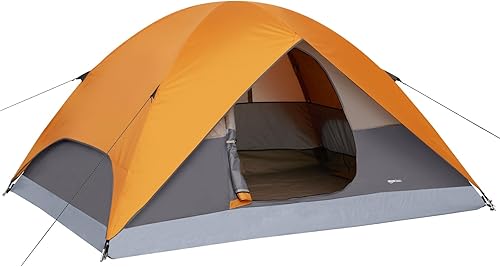
Amazon Basics 3-Season Dome
No-frills fair-weather shelter, ~$42, light and simple. Our score: 4.4/5
I'll be straight with you: this is not a storm tent. Fine for a dry weekend or a passing shower, a bad idea for a night of real rain or wind. That's not a flaw — it's the right tool for the right trip. Buying the honest match the first time is cheaper than buying twice.
Family-sized space without the family-sized price
Need to fit a couple of kids and a pile of gear? Big cabin tents from premium brands get expensive fast, but a budget family dome like the CAMPROS CP 6/8-person (~$110) gives you a roomy interior, a rainfly, mesh windows, and a divided-room option for separating the kids. It uses a traditional pole setup — no pop-up or instant gimmickry, just standard poles you thread and clip. For occasional family weekends in normal weather, it's a lot of square footage for the money.
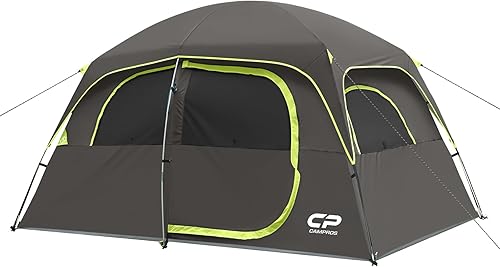
CAMPROS CP 6/8-Person
Roomy family dome, rainfly, divided-room option, traditional poles. Our score: 4.3/5
Where cheap actually bites
Now the honest counterweight. There are three situations where I'd tell a friend to spend more, and I mean it.
1. Serious wind and storms
This is the big one. Most budget tents run fiberglass poles and frames built for moderate wind. That's fine for a breezy afternoon and genuinely not fine for a mountain ridge in a front. Fiberglass doesn't bend-and-recover the way aluminum does — it snaps, usually at 2 a.m. with rain coming in. If you camp anywhere exposed, above treeline, on the coast, or in shoulder seasons when storms roll through, the aluminum poles and full-coverage fly on a pricier tent are worth every dollar. I've duct-taped a shattered fiberglass pole at midnight, and I don't recommend the experience.
2. Ultralight backpacking
If you're carrying your shelter miles on your back, weight and packed size stop being abstractions and start being the whole game. A ~9.8 lb car-camping dome is a non-starter on a thru-hike. Here you genuinely pay for engineering — but "expensive" is relative. A budget ultralight like the Naturehike Cloud-Up 2 (~$119) gets you a double-wall, 20D nylon, aluminum-pole tent at roughly 3.3 lb trail weight with a footprint included and a PU 3000–4000mm coating. It's the middle path: light enough for the trail without the $400 price tag. It's snug for two adults, so size your expectations.

Naturehike Cloud-Up 2
~3.3 lb, double-wall, aluminum poles, footprint included. Our score: 4.5/5
3. Frequent, heavy use
If you camp 30, 40, 60 nights a year, the math flips. A budget tent that's a bargain at 8 weekends a year gets worn hard at that pace — zippers fatigue, coatings wear, fiberglass gets brittle. At high mileage, a tougher tent's durability spreads its higher price across so many nights that it becomes the cheaper option per night. Cost-per-use is the metric that matters, not the sticker.
A simple decision framework
Don't overthink this. Run your trip through four questions and the answer falls out.
| Ask yourself | If cheap is fine | If you should spend up |
|---|---|---|
| How do you get to camp? | You drive to the site | You carry it miles on your back |
| What's the weather? | Fair to moderate, occasional showers | Real wind, storms, exposed terrain |
| How often do you camp? | A handful of weekends a year | Dozens of nights a year |
| What's the priority? | Space, value, easy setup | Weight, packed size, storm-proofing |
Land mostly in the left column? A cheap tent isn't a compromise — it's the smart buy, and the money you save is better spent on a sleeping pad that actually keeps you warm. Land in the right column on weather or weight? That's where price earns its keep. Most people are squarely in the left column and talk themselves into the right one because a salesperson rattled off impressive-sounding wind ratings. Buy for the trips you take, not the trips you imagine.
So — are cheap tents worth it?
For the camping most people actually do, yes, comfortably. The trick isn't spending more; it's spending right. A well-chosen budget tent matched to your real trips — driving to a campsite, normal weather, a few weekends a season — does everything a tent needs to do and leaves money in your pocket for the gear that affects comfort more. Save where saving makes sense, spend where wind and weight and mileage genuinely demand it, and don't let "you get what you pay for" guilt you into buying capability you'll never unpack.
The bottom line
Cheap tents are worth it for car, family, and casual camping in fair-to-moderate weather — which covers most campers. Spend up only for serious storms, ultralight backpacking, or heavy frequent use. If you want a single safe default, the Coleman Sundome's welded floor and ~$45–$115 price make it the budget tent I hand people first.
Check the Sundome price on Amazon →Want the full shortlist with each pick scored and matched to a trip type? Our ranked picks of the best cheap tents do exactly that, and the budget tent buying guide walks you through ratings, sizing, and the specs worth caring about before you spend a cent.
FAQ
Are cheap tents worth it for beginners?
For most beginners, yes. If you're car camping or family camping a handful of weekends a year in fair-to-moderate weather, a $40–$115 tent like the Coleman Sundome or Amazon Basics dome does everything you need. Spend the money you saved on a good sleeping pad instead — that affects your comfort far more than the tent's price tag. The time to spend up is when you know you'll be backpacking long distances or camping in serious wind and storms.
How long does a cheap tent actually last?
With light, occasional use — a few weekends a year, stored dry — a well-chosen budget tent like the Coleman Sundome easily lasts 5 to 10 seasons. What kills cheap tents early is heavy frequent use, packing them away wet (which breeds mildew that eats the coating), and UV from leaving them pitched in the sun for weeks. Treat a budget tent decently and the cost-per-night gets very small.
When is a cheap tent NOT worth it?
Three situations: serious wind and storms (most budget frames handle a moderate breeze but not a real storm, and fiberglass poles can snap in a real gale), ultralight backpacking where every ounce and the packed size matter, and frequent heavy use where you're camping dozens of nights a year. In those cases a more expensive tent's aluminum poles, fuller coverage, and tougher fabric earn their price.
Is a $40 tent good enough?
For the right trip, yes. The Amazon Basics 3-season dome at around $40 is a genuinely fine fair-weather shelter for festivals, backyards, and a beginner's first dry-weekend trip. It is not a storm tent — in a night of real rain or wind it'll struggle. Buy it knowing what it is and it's great value; expect it to handle a gale and you'll be disappointed.